
Got a stubborn wart on the bottom of your foot?
Plantar warts can be painful, persistent, and frustrating — especially when over-the-counter treatments haven’t worked. The good news: cryotherapy is a quick, proven treatment that most of our patients find far easier than they expected. We’ll walk you through every step, so there are no surprises.
Performed by qualified podiatrists. No referral needed.
Ready to get your wart looked at?
Same-week appointments usually available.
What happens at your cryotherapy appointment?
Here’s exactly what we’ll do, step by step:
We gently remove the hard skin covering the wart. Plantar warts usually sit under a layer of thick, dead skin (callus). Your podiatrist carefully trims this away so the treatment can reach the wart itself. Because callus is dead skin, this part is generally painless — you might feel a little tenderness if the wart is sore, but it passes quickly.
You might see tiny pin-point bleeds. Plantar warts have lots of tiny blood vessels running through them, so a few small spots of blood are completely normal. It’s actually a good sign — it means we’ve reached the wart and the treatment will work directly on it.
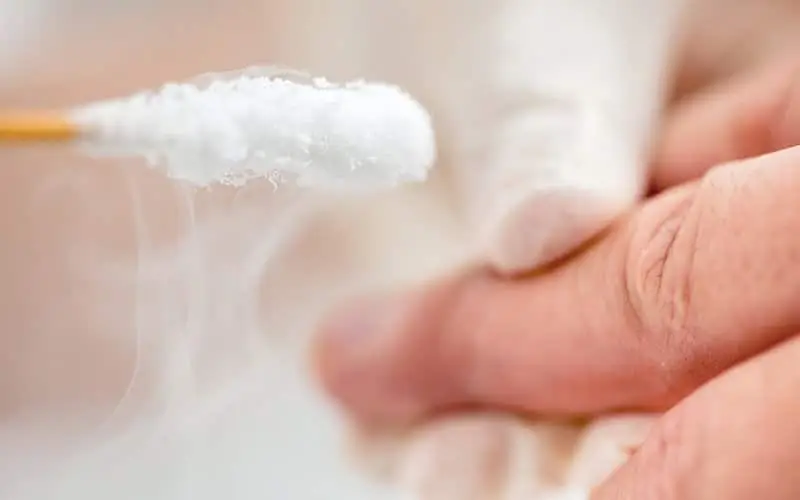
We apply the cryotherapy. Each wart is treated with liquid nitrogen. The skin turns white as it freezes and takes around 30 seconds to thaw. Most patients describe it as a sharp cold sensation — uncomfortable, but easily bearable, and over within seconds.
We give you clear aftercare advice. The skin around the area may be a little tender for a day or so. Sometimes a small blister forms — that’s normal. We’ll tell you exactly how to care for it, and book a follow-up to check your progress.
Have a question before booking?
We’re happy to chat through your options — no obligation.
▶ Call our friendly team on (02) 4942 2550
Honestly? It's a bit uncomfortable, but most of our patients tell us it was much less painful than they expected. The cold sensation feels a bit like an ice cube pressed firmly on your skin — sharp for a few seconds, then it eases off. Children handle it well too.
Most plantar warts need 3 to 6 treatments, spaced 2 to 3 weeks apart. Some clear up faster, others take a little longer. Because warts are caused by a virus, your immune system plays a big part — we're essentially giving it a nudge to recognise and clear the wart. We'll review your progress at every visit.
Plan for about 20 to 30 minutes. The cryotherapy itself only takes a few minutes — most of the time is spent assessing the wart, removing the overlying callus, and going through aftercare with you.
Yes. You can walk out of the clinic and drive yourself home. You might feel some tenderness for the rest of the day, so we recommend comfortable, well-cushioned shoes for the next 24 hours. Most people are back to normal activity the same day.
Sometimes — and that's okay. If a small blister appears, leave it alone (don't pop it), and cover it with a band-aid or light dressing. It will dry up and the skin underneath will heal on its own. If anything looks unusual, give us a call.
Cryotherapy is suitable for most people with plantar warts, including children. It's particularly worth considering if you've tried over-the-counter treatments without success.
However, it's not always the right choice for everyone. Please let us know before booking if you:
Have diabetes or poor circulation in your feet
Are pregnant
Have a compromised immune system
Have very sensitive skin or a history of poor wound healing
We'll always assess your suitability at your first appointment and recommend an alternative treatment if cryotherapy isn't the best fit for you.
Cryotherapy uses liquid nitrogen to freeze the infected tissue. The extreme cold destroys the virus-affected cells, allowing healthy new skin to grow in their place. It also triggers a small immune response, which helps your body recognise and fight the wart virus.
From $70 to $100 per treatment
Wart viruses can be persistent, and a small percentage do return — usually because the immune system hasn't fully cleared the underlying virus. If yours comes back, get in touch and we'll reassess. Sometimes a different combination of treatments works better the second time around.