
My Child’s Heel is Hurting — Is it Sever’s Disease? A Newcastle Podiatrist Explains
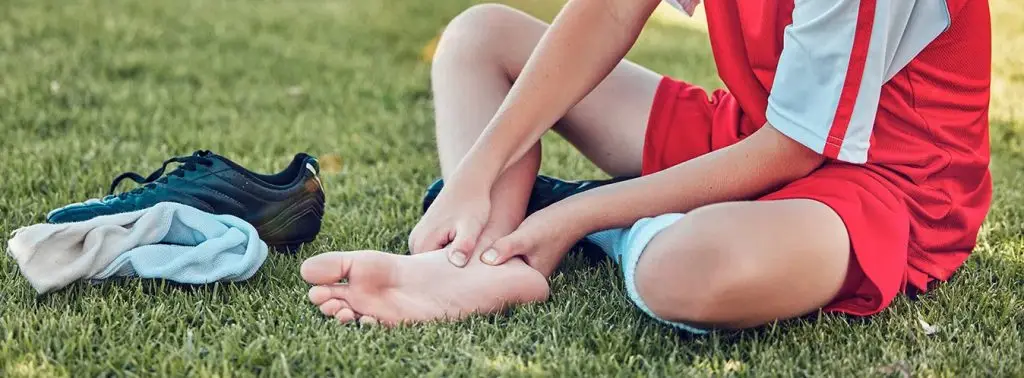
As winter sport season gets underway across Newcastle and Lake Macquarie, one of the most common calls we receive at East Coast Podiatry Clinic is from worried parents: “My child has been complaining about heel pain since football/netball/soccer started — what’s going on?”
In most cases, the answer is Sever’s disease — and while the name sounds alarming, the good news is it’s very manageable and your child won’t be sidelined forever.
What is Sever’s Disease?
Sever’s disease (medically known as calcaneal apophysitis) is not actually a disease at all — it’s an irritation of the growth plate in the heel bone. It’s one of the most common causes of heel pain in active children and is entirely related to the growing body.
During a growth spurt, the heel bone (calcaneus) grows faster than the Achilles tendon can keep up with. This creates tension where the tendon attaches to the growth plate at the back of the heel. Add in the repetitive impact of running and jumping on hard surfaces — footy ovals, netball courts, soccer fields — and that growth plate becomes inflamed and painful.
Who Gets It?
Sever’s disease typically affects children between the ages of 8 and 14, with boys slightly more commonly affected than girls, though active girls are absolutely not immune. It tends to peak at the start of sports seasons when training loads suddenly increase after a summer break.
If your child is in a growth spurt and plays a running or jumping sport, they are in the prime risk group.
What Does it Feel Like?
Common signs to look out for include:
- Heel pain during sport or immediately after
- Limping after a game or training session
- Pain first thing in the morning when getting out of bed
- Tenderness when you gently squeeze the sides of the heel
- A reluctance to participate in sport or physical activity at school
Pain typically eases with rest and worsens with activity — particularly running, jumping, or wearing flat shoes with little heel cushioning.
Why Does Winter Sport Make it Worse?
The start of the winter sport season is a perfect storm for Sever’s disease. After a relatively relaxed summer, kids go back to structured training almost overnight — multiple sessions per week plus weekend games. Add in cleats or football boots (which offer less cushioning than runners) and firm oval surfaces, and the Achilles tendon is under significant load very quickly.
We see a consistent spike in presentations to our clinic in May and June each year for exactly this reason.
How is Sever’s Disease Treated?
The reassuring news is that Sever’s disease responds well to treatment and doesn’t require surgery or extended time off in most cases. At East Coast Podiatry Clinic, our approach typically includes:
- Heel raises or heel cups — these reduce the tension the Achilles tendon places on the growth plate, providing quick symptom relief
- Stretching program — targeted Achilles and calf stretches to reduce tightness
- Footwear advice — ensuring boots and trainers offer adequate heel cushioning and support
- Custom orthotics — in more persistent or biomechanically complex cases, 3D printed custom orthotics can offload the heel and correct foot posture contributing to the problem
- Activity modification — in most cases we aim to keep kids playing where possible, with sensible load management rather than complete rest
When Will it Go Away?
Sever’s disease is self-limiting, meaning it resolves on its own once the growth plate matures and fuses — typically by age 15 in girls and 17 in boys. However, that doesn’t mean you should just wait it out. Managing it properly keeps your child active, prevents the pain from worsening, and avoids the frustration of missing the entire season.
When Should You See a Podiatrist?
If your child is limping, refusing to play sport, or complaining of heel pain that isn’t settling after a few days of rest, it’s worth getting it assessed. We can confirm the diagnosis, rule out any other causes of heel pain, and put a treatment plan in place quickly — often with significant relief at the first visit.
No referral is needed to see us at East Coast Podiatry Clinic in Kahibah. Same-week appointments are available.
Book Online Today
Don’t let heel pain keep your young athlete on the sideline. Book an appointment online or call us on (02) 4942 2550.
Medically reviewed by Tim Foran, Podiatrist (AHPRA registered). Last updated: May 2026.
